


Thực hiện Quyết định số 2104/QĐ-BVHTTDL ngày 23 tháng 6 năm 2025 của Bộ Văn hoá, Thể thao và Du lịch về việc thăm dò, khai quật khảo cổ và Chương trình nhiệm vụ năm 2025 của Ban Quản lý Di sản Văn hóa Thế giới Mỹ Sơn. Trong thời gian từ đầu tháng 7 năm 2025 đến nay, Ban quản lý Di sản Văn hóa thế giới Mỹ Sơn đã phối hợp với Viện Khảo cổ học học triển khai công tác thăm dò, khai quật khảo cổ tại Khu vực bãi đất giữa Tháp K và nhóm tháp trung tâm thuộc Khu đền tháp Mỹ Sơn. Đợt khai quật đã tiếp tục làm xuất lộ những dấu tích quý báu, góp thêm tư liệu từng bước xác định rõ ràng hơn về con đường thiêng ở Thánh địa Mỹ Sơn trong lịch sử.
Chiều ngày 12/12, Ban Quản lý Di sản Văn hóa thế giới Mỹ Sơn, tổ chức buổi hội thảo báo cáo kết quả Khai quật nghiên cứu khảo cổ học Kiến trúc đường dẫn vào Khu đền tháp Mỹ Sơn. Tham gia hội thảo có Phó giáo sư, tiến sỹ Ngô Văn Doanh - Nguyên Phó Viện trưởng Viện Nghiên cứu Đông Nam Á - Viện Khoa học Xã hội Việt Nam. Phó giáo sư, tiến sỹ Bùi Chí Hoàng - Phó Chủ tịch Hội Khảo cổ học Việt Nam, cùng các nhà khoa học, nhà nghiên cứu văn hóa Chăm. Bà Nguyễn Thị Thu Hiền -.PGĐ Sở VHTTDL Tp. Đà Nẵng tham dự.
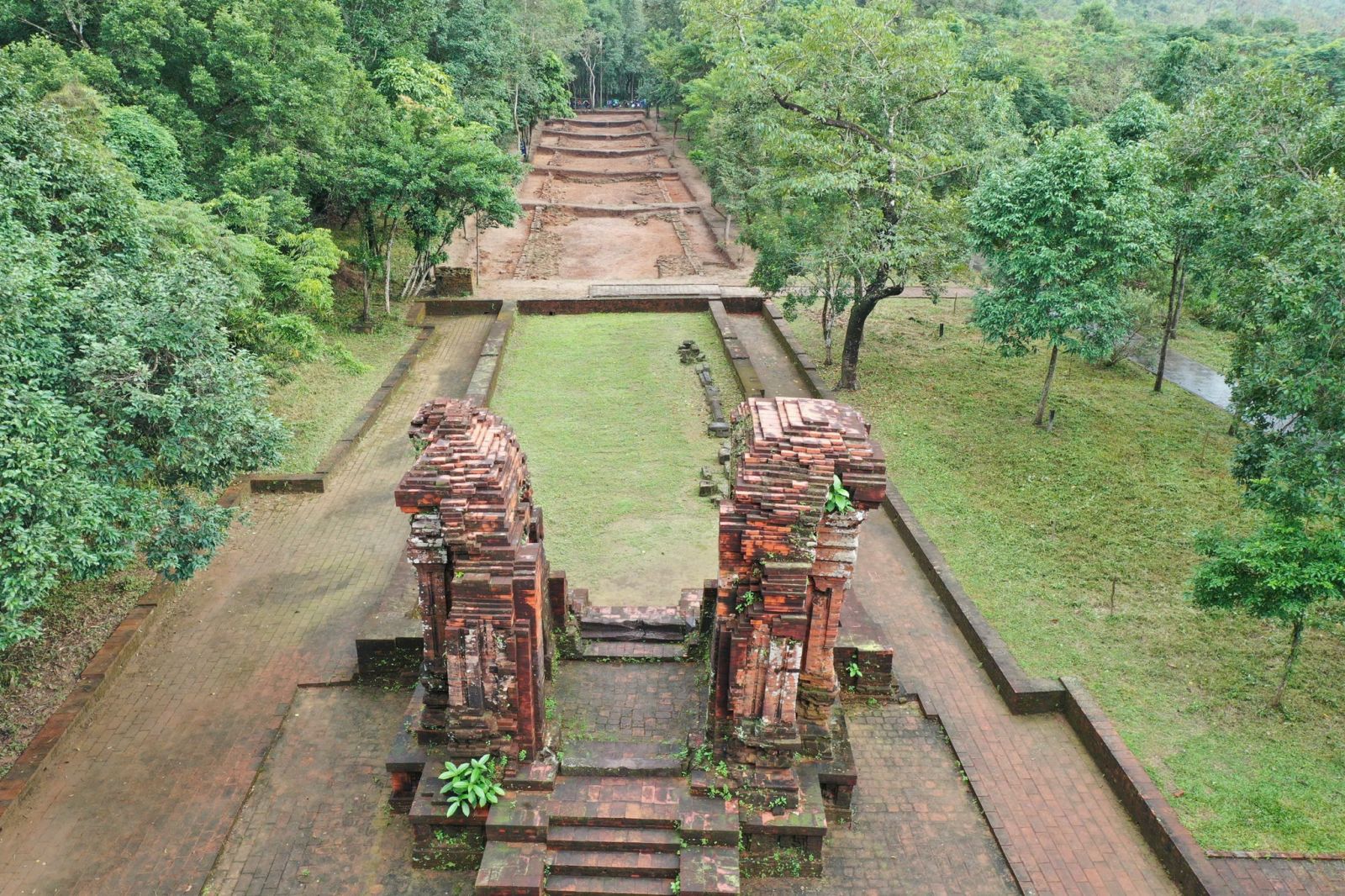
Đường dẫn khu tháp K được được Ban quản lý Khu di sản văn hóa thế giới Mỹ Sơn và Viện Khảo cổ học nghiên cứu thăm dò lần đầu vào tháng 6-2023. Theo các nhà khoa học đây là dấu tích tồn tại một con đường thiêng của người xưa đi vào trung tâm khu đền tháp là một trong những công trình kiến trúc chưa từng được biết đến ở Mỹ Sơn trong lịch sử tồn tại của di tích từ trước đến nay.
Sau đợt khai quật lần trước với độ dài được khai quật con đường trên 150m. Đợt khai quật lần này mở rộng các hố khai quật trên diện tích 770m2 nâng tổng diện tích con đường đã được làm rõ tính từ chân tháp dài 132m. Chiều cắt ngang con đường rộng 9m, nền đường được đầm chặt bằng cát sỏi và gạch vụn, có độ dày từ 0,15 - 0,2m. Tường bao hai bên đường được xếp từ các hàng gạch, móng tường được gia cố bằng lớp đầm sỏi cuội và bột gạch. Những dấu tích còn lại trên hai bức tường bao phía bắc và phía nam tiếp tục được làm rõ ghi nhận tường bắc được xây liền và có cao độ móng cao hơn; tường phía nam nằm trên nền địa hình thấp hơn và có tạo các cửa, cổng ra - vào ở một số vị trí cố định. Đợt khai quật đã xác định 4 vị trí được đặt các cửa cổng trên tường bao phía nam. Tại vị trí cửa cổng còn dấu tích thanh đà cửa bằng đá có lỗ mộng vuông để dựng trụ đá và lỗ mộng tròn để đặt trụ xoay của cánh cửa. Bên cạnh sự hiện diện phổ biến của các loại gạch và đá xây dựng kiến trúc đường dẫn, đợt công tác đã phát hiện một số mảnh vỡ của đồ đất nung và gốm men có niên đại từ thế kỷ 10 - 12.
.jpg)
Kết luận bước đầu tại hội thảo xác định chức năng tôn giáo của phế tích là con đường thiêng - con đường dẫn thần linh, vua chúa và tăng lữ Bà La Môn giáo đi vào không gian thiêng Mỹ Sơn ở khoảng thế kỷ 11 - 12. Kết quả này đồng thời cũng mở ra một vấn đề khoa học mới rằng Mỹ Sơn vẫn giữ vai trò là hạt nhân tôn giáo của Chămpa trong suốt tiến trình lịch sử của vương quốc. Những nghiên cứu so sánh bước đầu cũng ghi nhận con đường thiêng mới được phát hiện "là duy nhất trong hệ thống di tích văn hóa Chămpa, khác hẳn với các địa điểm khác bởi đây là con đường dẫn vào một khu di tích". Ở những di tích khác các con đường được thiết kế theo trục đi thẳng từ ngoài vào đền tháp trung tâm.
Phát biểu kết luận tại buổi hội thảo, lãnh đạo Ban quản lý Di sản Văn hóa Thế giới Mỹ Sơn cho biết sẽ phối hợp cùng Viện Khảo cổ học sẽ tiếp tục xây dựng chương trình hợp tác nghiên cứu làm rõ quy mô, cấu trúc và diện mạo của toàn bộ con đường trong bối cành tồng thể khu di tích Mỹ Sơn; khẩn trương thực hiện công tác tu bổ, bảo quản nhằm phát huy tốt hơn giá trị lịch sử văn hóa di tích; tổ chức đưa đón du khách theo đúng con đường di sản người Chăm đã để lại, giúp du khách có cái nhìn rõ ràng hơn về Thánh địa Mỹ Sơn và văn hóa Chămpa trong lịch sử.
Văn Khoa
16 Tháng 12,2025
Chia sẽ mạng xã hội
- Đại sứ Ấn Độ làm việc tại Mỹ Sơn (28.05.2018)
- Đón nhận bằng Di sản văn hóa phi vật thể Nghệ thuật Bài chòi Trung Bộ (08.05.2019)
- Đề xuất biện pháp cấp thiết bảo vệ công trình Tháp B3- kiệt tác kiến trúc trong khu đền tháp Mỹ Sơn (19.04.2018)
- Bộ VH-TT&DL hỗ trợ Quảng Nam 1,5 tỷ đồng gia cố tháp B3 (07.05.2018)
- Dịch văn bia tại Di sản Văn hóa thế giới Mỹ Sơn sang tiếng Việt và Anh (04.04.2018)
- Ban quản lý Di sản văn hóa thế giới Mỹ Sơn đón nhận Huân chương Lao động hạng Ba (06.04.2018)


