


Tổng quan về Khu đền-tháp Mỹ Sơn: Khu Thánh địa Mỹ Sơn cách thành phố Đà Nẵng gần 70 km về phía tây, nay thuộc địa bàn xã Thu Bồn, thành phố Đà Nẵng. Gần 70 công trình kiến trúc, kiểu dáng khác nhau được người Chăm xây dựng liên tục từ thế kỷ IV đến thế kỷ XIV. Trong tiến trình mười thế kỷ đó kiến trúc đền – tháp Mỹ Sơn cũng đã có nhiều thay đổi lớn về vật liệu, kỹ thuật xây dựng và cả phong cách nghệ thuật trang trí, có những vật liệu nhẹ chỉ tồn tại trong giai đoạn đầu như gỗ lá, hai vật liệu gạch và đá luôn tồn tại song hành đồng thời những lớp người thợ thủ công Chăm tài hoa cũng ngày càng tích lũy chắc lọc, đúc kết chế tác, tạo tác nên những công trình to, cao và bền vững hơn tồn tại cho đến ngày nay.
Dựa vào nội dung ghi trong văn bia… thế kỷ IV và vết tích qua các đợt khai quật những công trình sớm nhất ở Mỹ Sơn từ thế kỷ IV- VI làm bằng vật liệu gỗ sau đó bị thiêu hủy do cơn hỏa hoạn. Từ thế kỷ VII – VIII người Chăm đã biết kết hợp giữa hai vật liệu gạch và đá trong xây dựng đền-tháp. Tuy nhiên giai đoạn này gạch chỉ được giới hạn với các bức tường thấp, cột chịu lực vẫn là gỗ đứng trên chân đá tảng, sườn nhà bằng gỗ và lợp ngói mũi mác (tháp E1). Từ nửa cuối thế kỷ VIII về sau kỹ thuật xây dựng đã có bước tiến cao hơn người Chăm đã không còn sử dụng gỗ trong kết cấu chịu lực thay vào đó là vật liệu đá hoặc gạch (ngoại trừ các tháp phụ có kích thước lớn như Mandapar hay còn gọi là nhà tịnh tâm vẫn còn dùng sườn gỗ để lợp ngói hoặc các cánh cửa ở những ngôi đền chính).
Nguồn gốc đá: Vùng thung lũng Mỹ Sơn không có loại đá sa thạch như đã sử dụng tồn tại trên các di tích mà chỉ có vùng phụ cận thuộc làng Mỹ Sơn thuộc xã Duy Phú cũ hoặc vùng đồi gò thuộc xã Duy Tân cũ, các địa danh Gò Đá, Hóc Đá, Đá Núc… nơi còn lưu dấu vết tích của người Chăm (vết tích khai thác đá của người Chăm có nhiều khác biệt so với người Kinh, vài mẫu tự hay ký hiệu trên còn lưu lại). Từ điểm khai thác này đến Mỹ Sơn hơn 5km về phía tây-bắc.
Cách chọn và chế tác đá: Giai đoạn sớm đá sa thạch vàng là được ưa chuộng bởi dễ tách ra và dễ điêu khắc chi tiết nhỏ. Tuy nhiên chịu lực kém và dễ mòn mờ từ các tác động bên ngoài…Trong giai đoạn đầu chưa tích lũy kinh nghiệm nên khai thác cũng bị lẫn vào đá có thớ ngang sau khi đưa vào thành phần kiến trúc hay tượng thờ tác động của thời gian sẽ bị bóc tách ra theo lớp (trụ cửa F2, tấm tympan kalan F1, tượng bò thần E6…). Càng về sau người Chăm có lẽ nhận biết phân biệt đặt tính từng loại đá qua màu sắc, hình khối, đá tròn lộ thiên, đá trầm tích, kết cấu hạt…đồng thời kỹ năng chế tác đá ngày càng thành thạo hơn, nên tùy theo công năng sử dụng mà khai thác loại đá sa thạch tương ứng. Đá trong thành phần kiến trúc như trụ, đà cửa, lanh-tô bao giờ cũng rắn hơn, đồng màu, chịu lực cao…Đá trang trí hoa văn, tượng thờ, vật thờ chất liệu đá có kết cấu hạt mịn dễ điêu khắc. Đến thế kỷ X là thời kỳ đỉnh cao của kỹ thuật khai thác, chế tác đá ứng dụng phục vụ vào công trình đền-tháp, đền A1 Mỹ Sơn là minh chứng cho kỹ năng đó, ngoài kích thước to lớn, trọng lượng từ hai đến ba tấn trên một cấu kiện, đá rắn chắc, gần như không bị mòn mờ hay nấm mốc địa y xâm thực phát triển.
Vật liệu đá trong từng thành phần kiến trúc
Phần móng: Móng tháp Chăm chủ yếu rộng, không sâu tùy thuộc vào từng địa tầng, qui mô lớn nhỏ từng công trình mà móng sâu, nông khác nhau, cạn nhất chừng 20-30cm, sâu nhất cũng gần 100cm. Đá cuội và cát là hai vật liệu cơ bản được đầm chặc các lớp dưới cùng (phần móng không sử dụng đá sa thạch), kế tiếp một loại hỗn hợp màu nâu đỏ được nện chặt lên phần trên (có lẽ là vôi sò, bột gạch và nhựa thực vật) vừa tạo mặt bằng để xây các lớp gạch trên của bề mặt móng.
Phần đế tháp: Là khối kiến trúc thấp nhưng lại to và dày nhất, như một khung đỡ cho toàn trọng lực ngôi tháp bên trên, phần đế tháp những công trình có niên đại muộn như tháp G1(thế kỷ mười hai) lớp trên cùng được kiềng lớp đá ong, H1(thế kỷ mười ba) lớp trên cùng kiềng bằng đá sa thạch, trường hợp cá biệt tháp B1 cả đế tháp được xếp bằng đá.
Phần thân tháp:
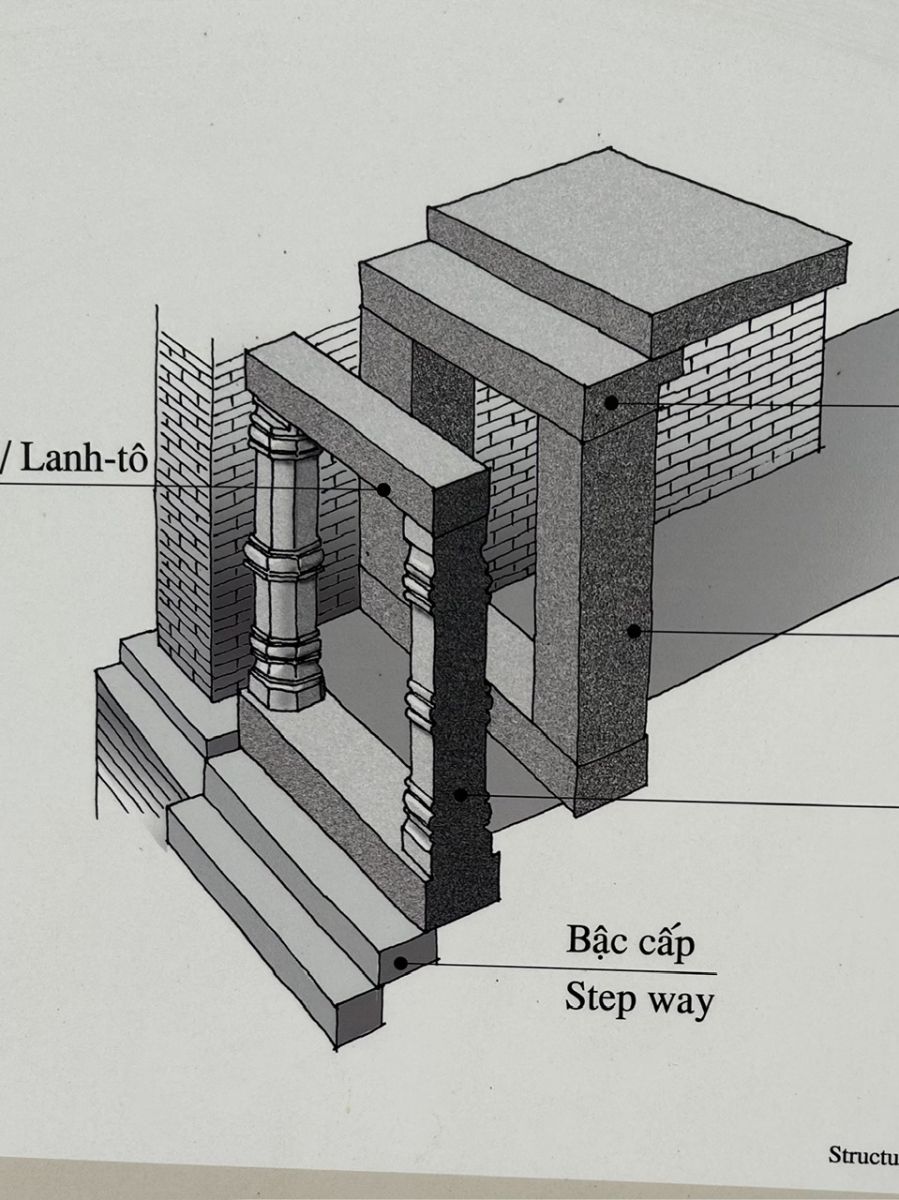
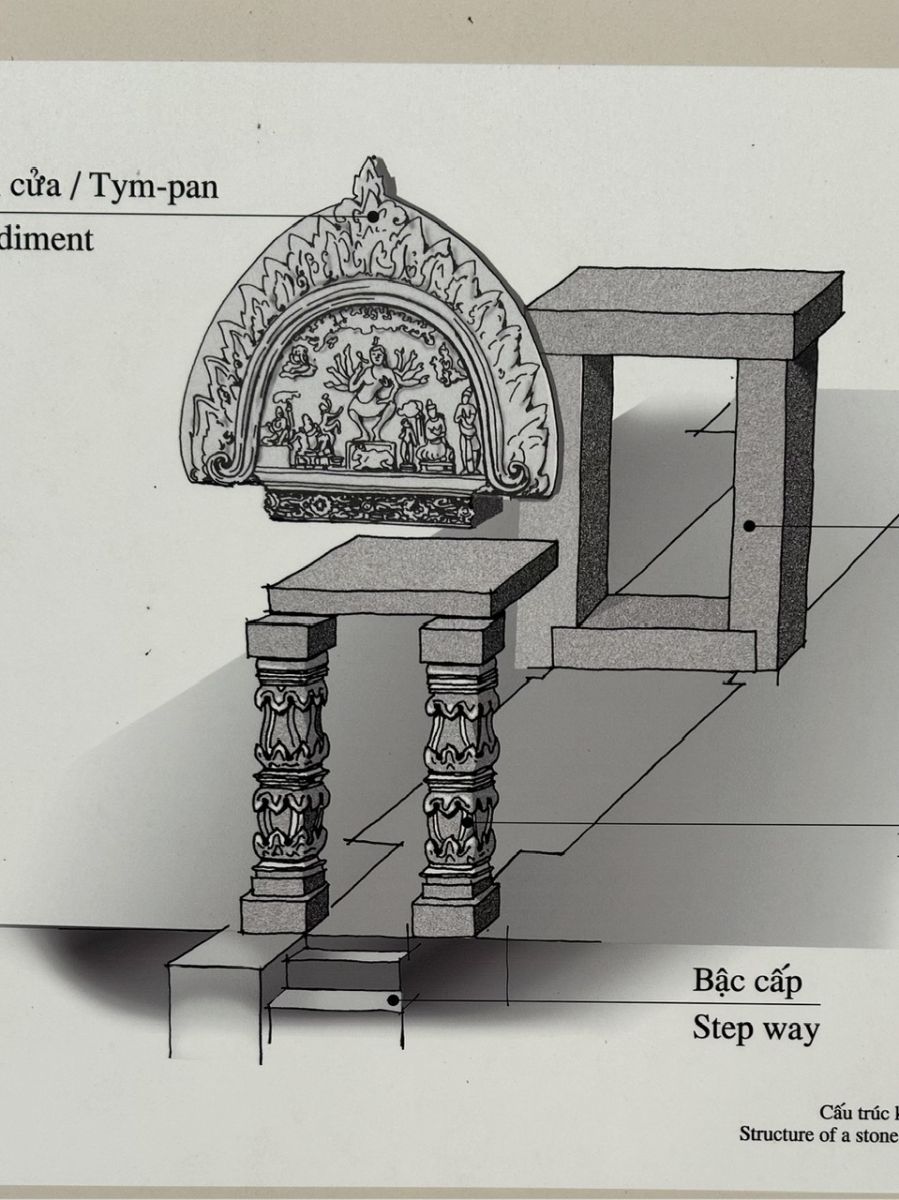
Khối kiến trúc được thu lại nhỏ hơn vật liệu đá không thể thiếu cho cấu trúc tiền sảnh, khung cửa. Cửa vào một ngôi tháp là một tiền sảnh ngắn bao gồm hai khung đá bên trong và bên ngoài, (cá biệt một vài công trình có thay đổi khung bên ngoài là trụ xây bằng gạch). Kỹ thuật chế tác khung đá được tính toán kỹ lưỡng, khối đá đà cửa (khối dưới) khi nào kích thước lớn hơn khối đá lanh-tô (khối trên), hai trụ thoạt nhìn là hình trụ vuông nhưng thực ra chân trụ lúc nào cũng to hơn đầu trụ, bề mặt ngoài thân trụ phẳng nhẵn nhưng phía trong tiếp xúc với tường gạch được tạo gờ hoặc thô nhám mục đích tăng độ bám dính với tường gạch. Trên lanh-tô chúng ta thường thấy có tấm tympan hình tam giác thường điêu khắc các vị thần. Ngoài ý nghĩa nội dung bức điêu khắc nhấn mạnh hình ảnh thờ vị thần bên trong đền, tăng thêm điểm nhấn thẩm mỹ kiến trúc còn là công năng quan trọng chia phần chịu lực cho tấm lanh-tô (trọng lực khối kiến trúc bên trên được phân đều ra hai đầu trụ, tránh trọng lực rơi vào trung điểm lanh-tô) (hình 1). Thân tháp có nhiều trụ áp tường, vòm cửa chính, vòm cửa giả (nhiều gờ góc) mục đích vừa trang trí vừa tăng cường lực cho khối kiến trúc.
Lê Văn Minh
23 Tháng 1,2026
Chia sẽ mạng xã hội
- BẢO TỒN VÀ PHÁT HUY GIÁ TRỊ DI SẢN VĂN HÓA PHI VẬT THỂ DƯỚI HÌNH THỨC CHƯƠNG TRÌNH NGHỆ THUẬT TẠI BQL DSVHTG MỸ SƠN (11.07.2025)
- Phó Đại sứ Ấn Độ tại Việt Nam thăm Khu đền tháp Mỹ Sơn (03.07.2025)
- Phê duyệt nhiệm vụ lập Quy hoạch, bảo quản, tu bổ, phục hồi di tích quốc gia đặc biệt Khu đền tháp Mỹ Sơn (01.07.2025)
- Trầm Hương Mỹ Sơn (26.06.2025)
- Tài trợ từ chính phủ Ấn Độ để bảo tồn nhóm E-F, di tích Mỹ Sơn (23.06.2025)
- Tăng cường công tác bảo vệ Bảo vật quốc gia tại Khu đền tháp Mỹ Sơn (06.06.2025)


